Tag Archives: Riley Behan-Bush

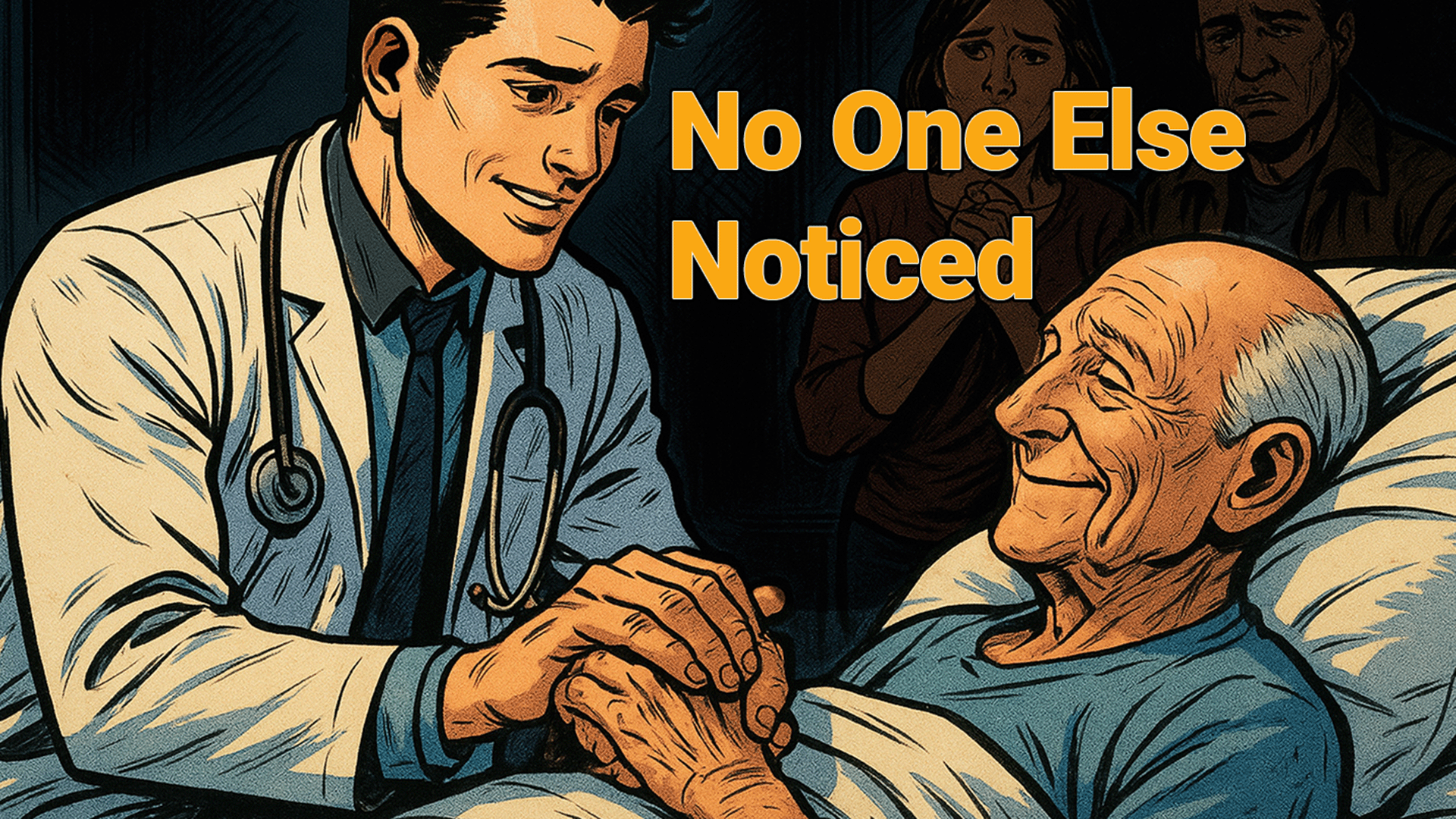
Five Med Students on Thriving in Clerkships

Five M3s explain what actually happens when preclinical learning meets real patients.

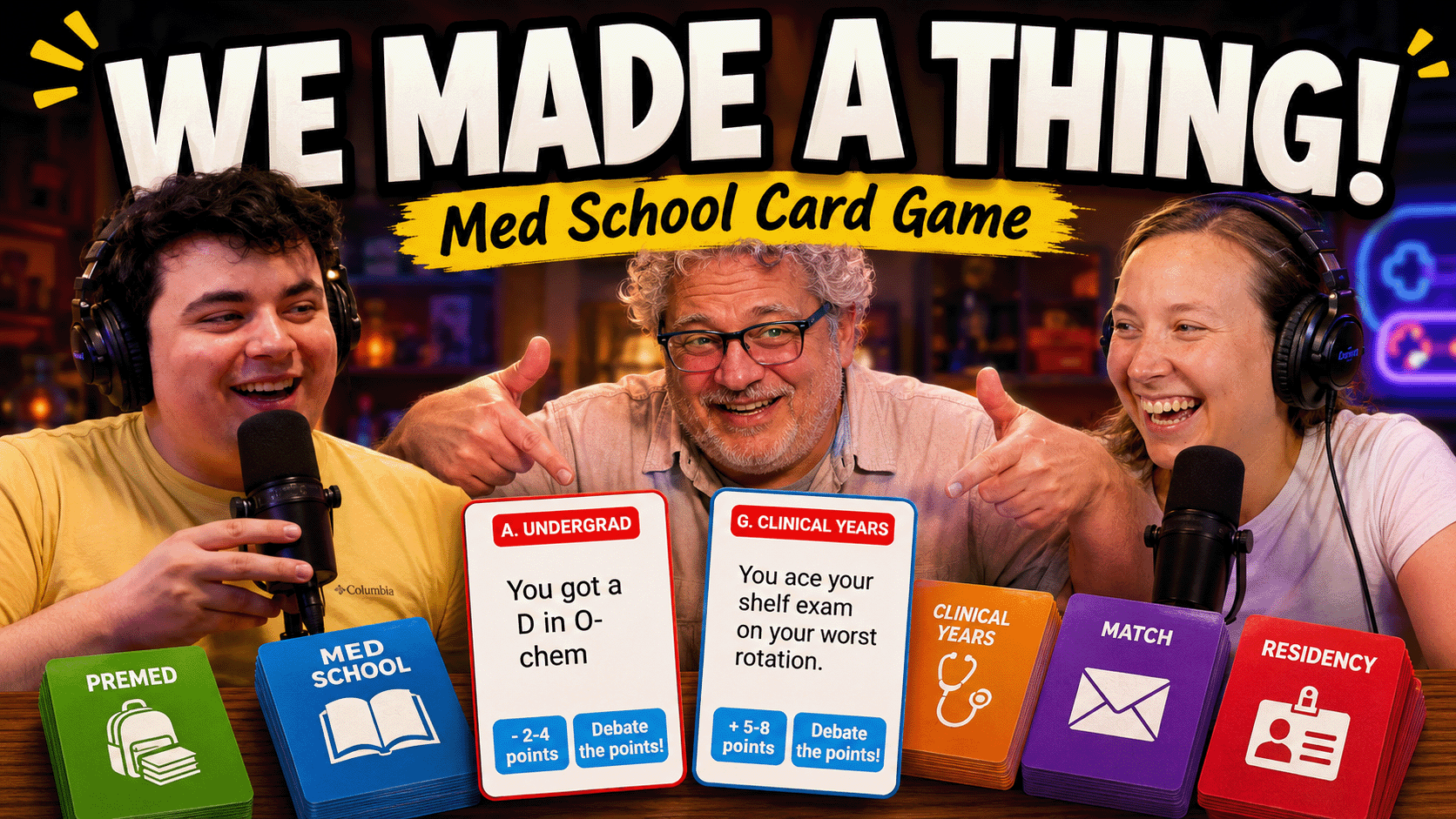
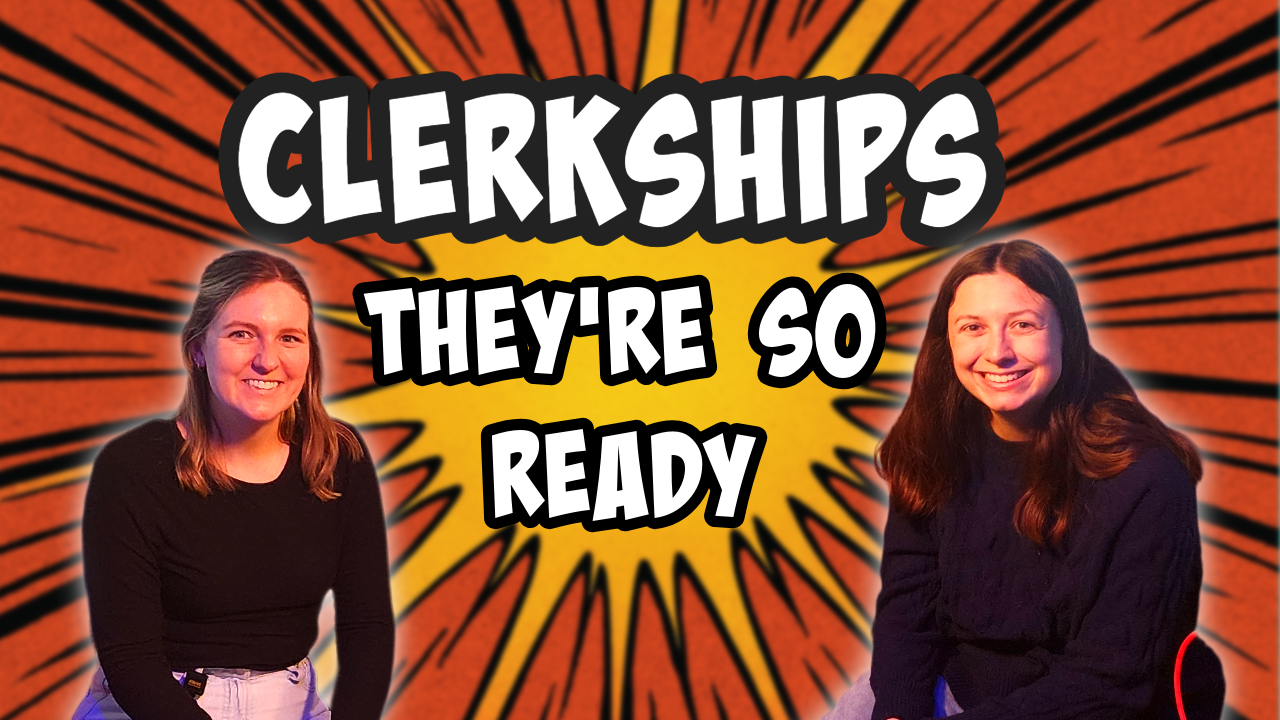
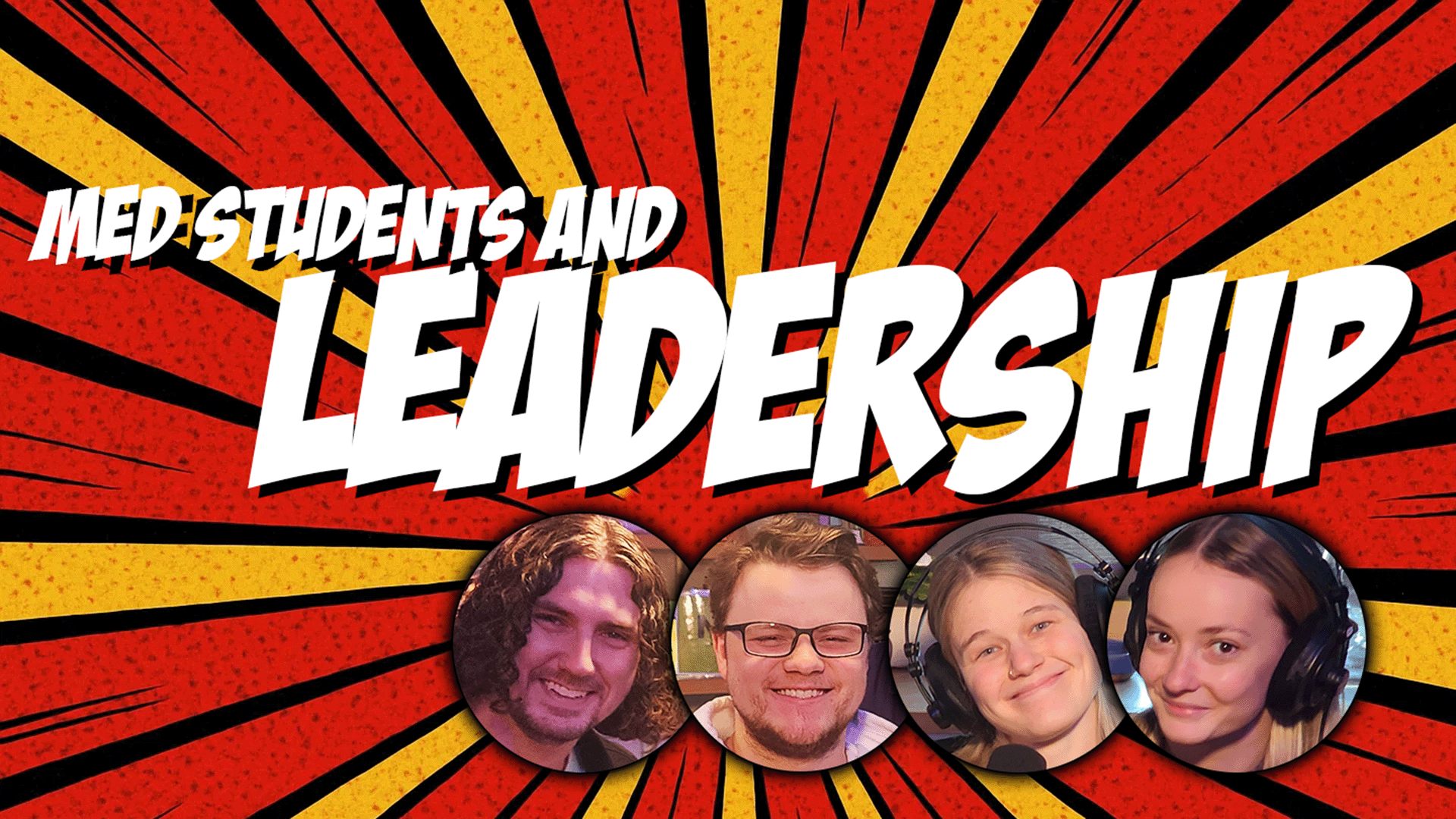
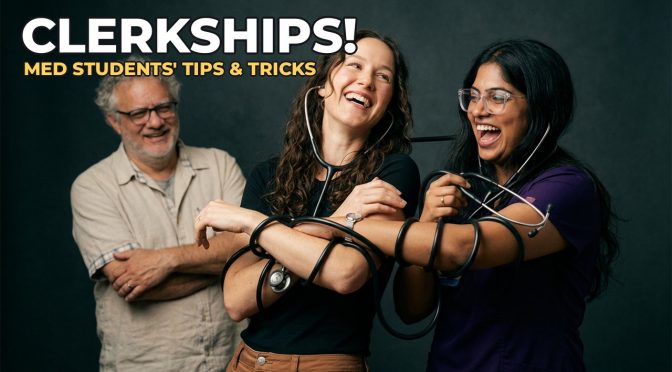
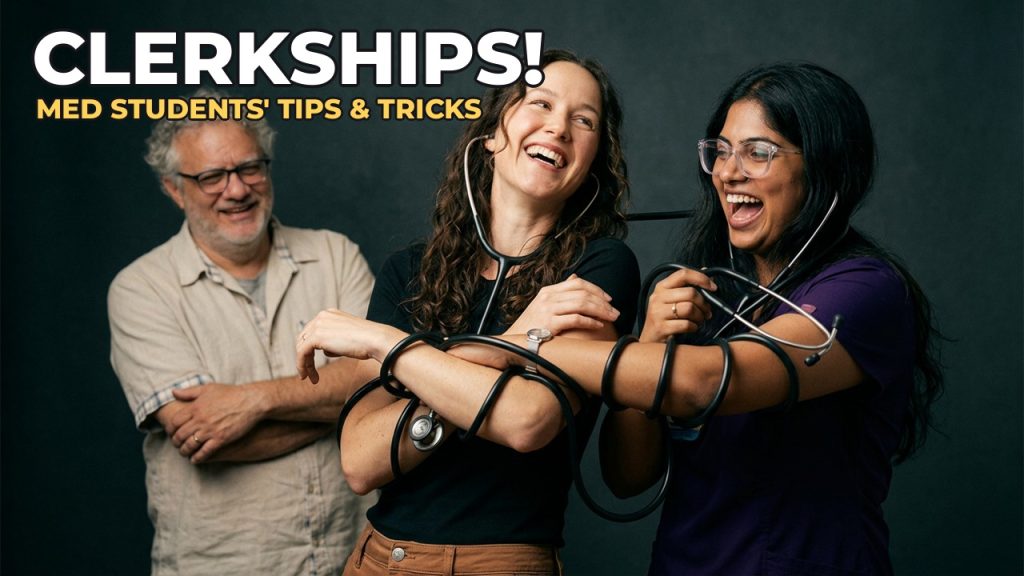
Dave sits down with a crew of M3s and one asterisked MSTP M4 — Riley Behan-Bush, Samantha Gardner, Srishti Mathur, Sahana Sarin, and Sarah Upton — to talk about the actual experience of clerkships: what the jump from three semesters of preclinical book-learning into surgery, psychiatry, emergency medicine, and family medicine really feels like, why the first two weeks can swing from “best of med school” to “worst of med school” depending entirely on the rotation you land, and how you’re supposed to figure out your place on a team that changes every two weeks. They dig into the actual mechanics of honoring a clerkship — shelf exam cutoffs that can sit at 90%+, evaluations that make up 70-80% of a grade, and the particular indignity of missing honors by a single point after doing everything right.

The group works through how to handle conflicting instructions from residents and attendings, how to ask questions without challenging the hierarchy (“for my own understanding, can you explain why you decided…”), and how to actually figure out a specialty when you love everything, including surgery where you’ll stand for hours. Sahana’s pros-and-cons journal after every rotation gets a real endorsement. Also, they answer a batch of questions submitted by their own preclinical classmates: how much free time you actually get (some), whether Des Moines versus Iowa City rotations matter (it depends what you want out of medicine), and what actually makes clerkship life easier — which turns out to be a year’s supply of Costco garbage bags, a cellular hotspot, and, for at least one host, a husband who meal preps.
Episode credits:

  • Producer: Isa Perez-Sandi
  • Co-hosts: Srishti Mathur, Sarah Upton, Samantha Gardner, Riley Behan Bush, Sahana Sarin
  • Production: SCP Media Lab–Anna Royer, Cyrus Barati, Isa Perez-Sandi, Zach Grissom, Sarah Upton, Srishti Mathur, David Lee, and Jacob Thompson 

[URL template for episode https://media.blubrry.com/theshortcoat/podcast.uiowa.edu/com/osa/CHANGETHIS.mp3]

The views and opinions expressed on this podcast belong solely to the individuals who share them. They do not represent the positions of the University of Iowa, the Carver College of Medicine, or the State of Iowa. All discussions are intended for entertainment purposes only and should not be taken as professional, legal, financial, or medical advice. Nothing said on this podcast should be used to diagnose, treat, or prevent any medical condition. Always seek qualified professional guidance for personal decisions.

We Want to Hear From You: YOUR VOICE MATTERS!

We welcome your feedback, listener questions, and shower thoughts. Do you agree or disagree with something we said today? Did you hear something really helpful? Can we answer a question for you? Are we delivering a podcast you want to keep listening to? Let us know at https://theshortcoat.com/tellus and we’ll put your message in a future episode. Or email theshortcoats@gmail.com.

We need to know more about you! https://surveys.blubrry.com/theshortcoat (email a screenshot of the confirmation screen to theshortcoats@gmail.com with your mailing address and Dave will mail you a thank you package!)

The Short Coat Podcast is FeedSpot’s Top Iowa Student Podcast, and its Top Iowa Medical Podcast!  Thanks for listening!

Continue reading Five Med Students on Thriving in Clerkships →

Share

MD/PhD: The Long Game of Medicine and Research

Physician scientists live at the intersection of clinic and lab

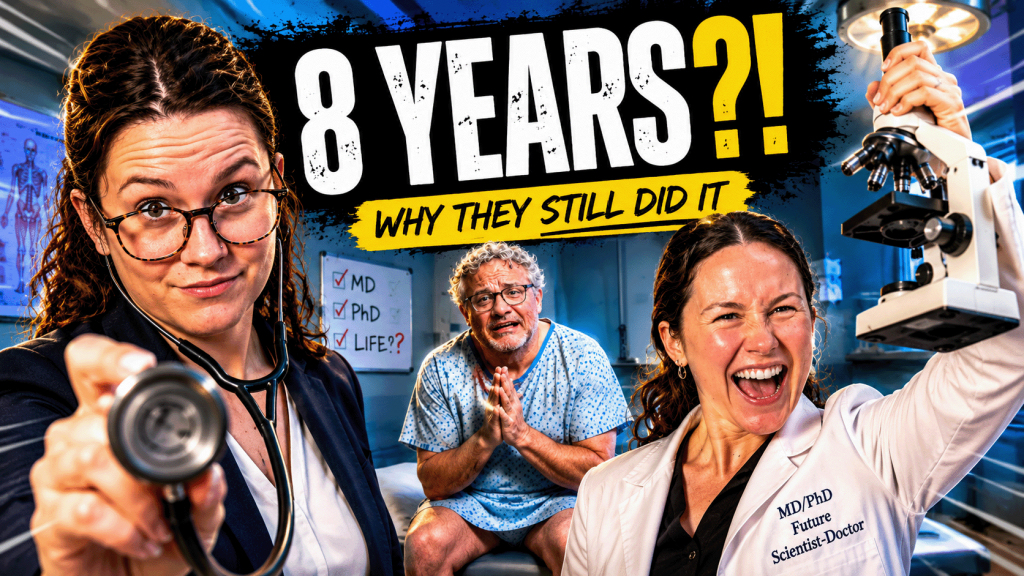
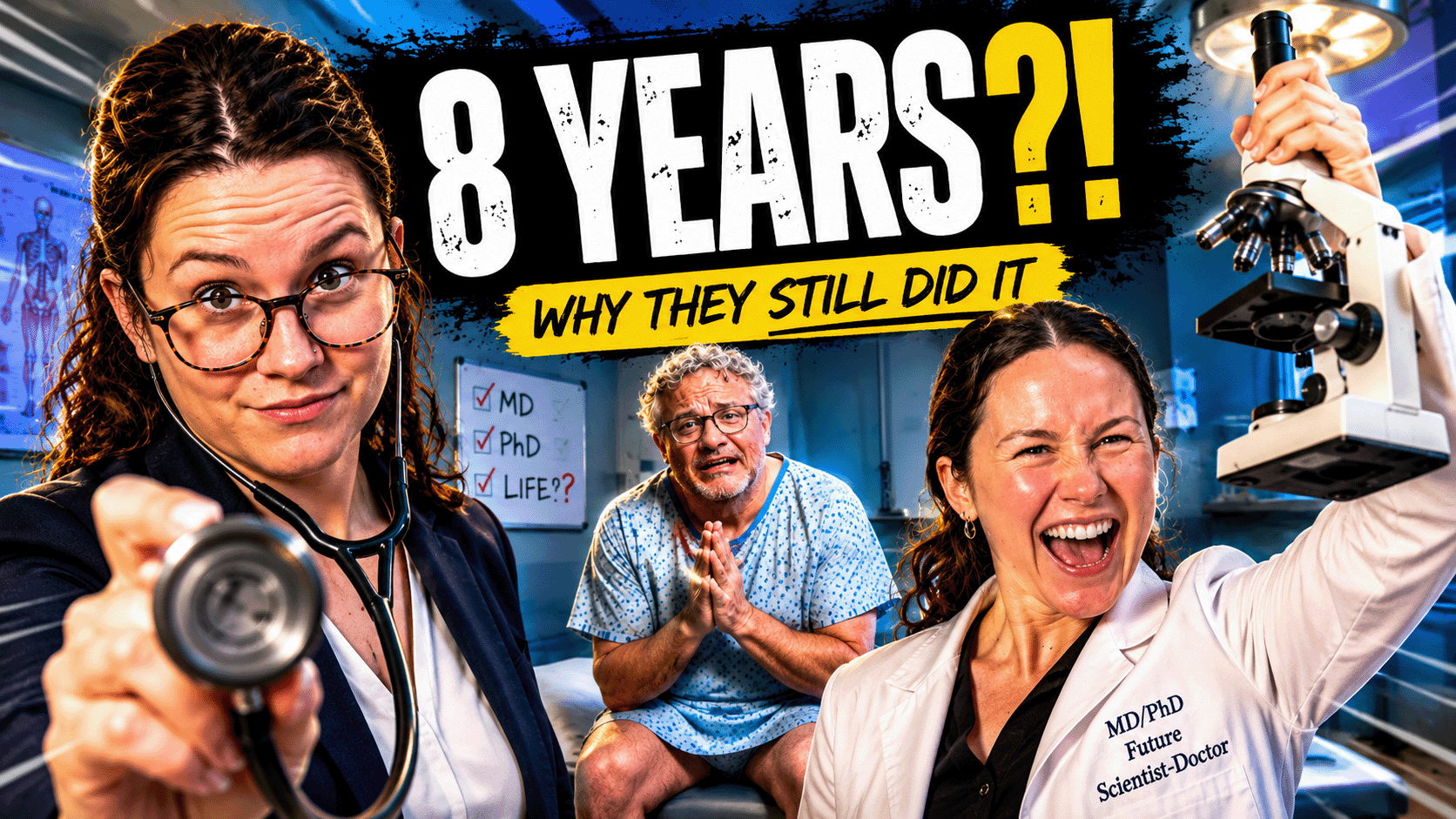
There are so many kinds of physicians. This time, we take a closer look at one type that, from the outside, might seem incredibly difficult to achieve–the MD/PhD. Eight years (!) of combined medical and scientist training seems like a lot. But consider the paths of MD/PhD students Riley Behan-Bush and Hannah Van Ert. Riley found the program through a Google search about whether to pick med school or grad school, and Hannah had already started a career in nursing before a research lab changed her path completely. To them, the eight years between starting and finishing ended up being the right move, and in the end, it often didn’t feel like a long slog of schooling (even if everyone outside the program still calls it school). Now in their final stretch, Hannah and Riley sit with Darren Hoffmann, PhD, and Martha Carvour, MD/PhD (CCOM Class of 2012) who now helps run Iowa’s Medical Scientist Training Program to shed light on this more meandering path to physician-hood.

The conversation doesn’t stay comfortable for long. The crew discusses recent federal funding cuts, the “sacrifices” MD/PhDs make for the path, NIH grant uncertainty, and the question of who gets to become a physician scientist when the money starts moving around in unpredictable ways. Darren puts it plainly: those who control the money don’t have the imagination needed to make the changes scientists envision; grant-writing done well is the bridge for that gap. Hannah speaks of her fright when cuts led some MSTP programs to worry they wouldn’t be able to accept students. She’s also thinking about what the pipeline looks like in fifteen years and whether it defaults back to “wealthier white men.” Riley’s optimistic that physician scientists, because they talk to patients every single day, are better positioned than anyone to rebuild public trust in science, a view Hannah is less convinced of. Martha thinks historically scientists have often been too concerned with their own niche interests, when they should spend more time showing up in their communities.

Episode credits:

  • Producer: Isa Perez-Sandi
  • Co-hosts: Riley Behan-Bush, Hannah Van Ert
  • Guest: Martha Carvour, MD/PhD; Darren Hoffmann, PhD
  • Production: SCP Media Lab–Anna Roger, Cyrus Barati, Isa Perez-Sandi, Zach Grissom, Sarah Upton, Srishti Mathur, David Lee, and Jacob Thompson 

The views and opinions expressed on this podcast belong solely to the individuals who share them. They do not represent the positions of the University of Iowa, the Carver College of Medicine, or the State of Iowa. All discussions are intended for entertainment purposes only and should not be taken as professional, legal, financial, or medical advice. Nothing said on this podcast should be used to diagnose, treat, or prevent any medical condition. Always seek qualified professional guidance for personal decisions.

We Want to Hear From You: YOUR VOICE MATTERS!

We welcome your feedback, listener questions, and shower thoughts. Do you agree or disagree with something we said today? Did you hear something really helpful? Can we answer a question for you? Are we delivering a podcast you want to keep listening to? Let us know at https://theshortcoat.com/tellus and we’ll put your message in a future episode. Or email theshortcoats@gmail.com.

We need to know more about you! https://surveys.blubrry.com/theshortcoat (email a screenshot of the confirmation screen to theshortcoats@gmail.com with your mailing address and Dave will mail you a thank you package!)

The Short Coat Podcast is FeedSpot’s Top Iowa Student Podcast, and its Top Iowa Medical Podcast!  Thanks for listening!

Continue reading MD/PhD: The Long Game of Medicine and Research →
Share

They Way Most Docs are Paid Doesn’t Lead to Healthier Patients (Recess Rehash)

[ICYMI, here’s a rerun of a show released earlier this year. We’ll be back with new shows starting next week!]

How the system pays doctors can change healthcare outcomes—sometimes in scary ways.

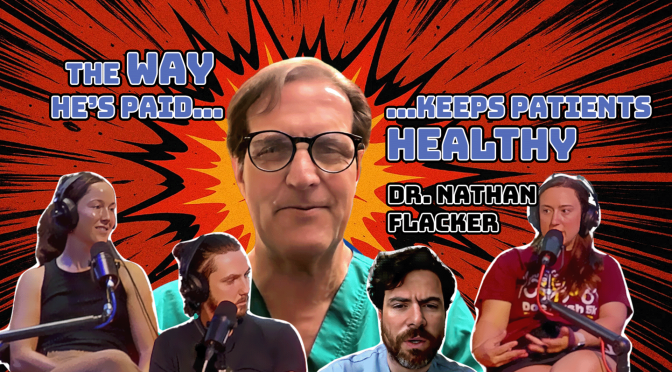
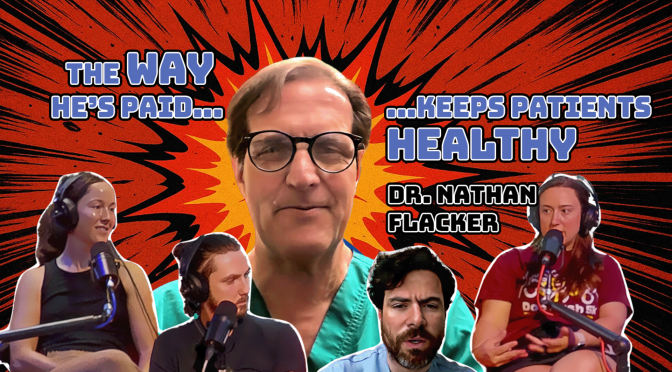
The way docs are paid can make patients sicker…or can lead to healthier ones. The payment schemes most docs work under incentivize them to fix patients, while others motivate them to prevent illness—and geriatrician Dr. Jonathan “Nathan” Flacker is here to explain why. This episode rips the curtain off RVUs, fee-for-service traps, and the real reason your doc is rushing through your visit (hint: it’s not personal, it’s math).

We dig into ChenMed’s wild idea: what if clinics got paid to keep you out of the hospital? Turns out, when money flows toward health instead of procedures, everyone wins. Except maybe the $400M proton beam facility (for the record, we love proton beams, but you might not need them if you can avoid cancer altogether).

Is concierge-style medicine only for the wealthy? What happens when you build “rich person care” for low-income seniors? And how many patients can a doc see well before it all breaks? If you’re dreaming of a career where you actually help people instead of just clicking boxes—this one’s a wake-up call.

Also: Love calls, RVU debt, and why pajama time should be illegal.

Episode credits:

  • Producer: Jeff Goddard
  • Co-hosts: Riley Behan-Bush, Zach Grissom, Alex Nigg
  • Guest: Dr. Jonathan “Nathan” Flacker, ChenMed

We Want to Hear From You: YOUR VOICE MATTERS!

We welcome your feedback, listener questions, and shower thoughts. Do you agree or disagree with something we said today? Did you hear something really helpful? Can we answer a question for you? Are we delivering a podcast you want to keep listening to? Let us know at https://theshortcoat.com/tellus and we’ll put your message in a future episode. Or email theshortcoats@gmail.com.

We need to know more about you! https://surveys.blubrry.com/theshortcoat (email a screenshot of the confirmation screen to theshortcoats@gmail.com with your mailing address and Dave will mail you a thank you package!)

The Short Coat Podcast is FeedSpot’s Top Iowa Student Podcast, and its Top Iowa Medical Podcast!  Thanks for listening!

Continue reading They Way Most Docs are Paid Doesn’t Lead to Healthier Patients (Recess Rehash) →
Share

Going on Leave: The Power Move No One Talks About in Med School

What med schools don’t tell you about hitting pause.

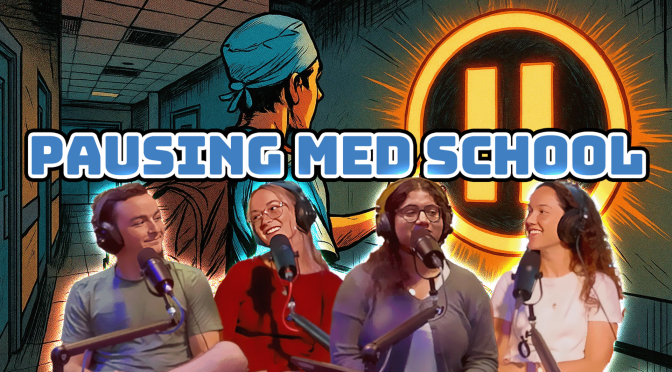
Turns out, pausing med school can actually be the smartest career move. Whether you’re spiraling in burnout, floundering in step prep, or just eyeballing that MPH, here’s an option you should consider: taking a leave of absence.

MD/PhD student Riley Behan-Bush, and M2s Srishti Mathur, Megan Perry, and Jay Miller take on the taboo option you’ll only find in the student handbook—what happens when med students hit pause. From Riley’s built-in MD/PhD “leave” to Srishti’s public health ambitions and Dave’s stats on distress, the Short Coats break down the reasons people step back… and why they return stronger.

Of course, going on leave isn’t without risks. The crew spills on insurance nightmares, loan limbo, and the heartbreak of watching your classmates match without you. But they also dish on planning your leave, making it productive, and protecting your peace.

Look to your left. Look to your right. Y’all are going to graduate.

Episode credits:

  • Producer: Dave Etler
  • Co-hosts: Riley Behan-Bush, Srishti Mathur, Jay Miller, Megan Perry

We Want to Hear From You: YOUR VOICE MATTERS!

We welcome your feedback, listener questions, and shower thoughts. Do you agree or disagree with something we said today? Did you hear something really helpful? Can we answer a question for you? Are we delivering a podcast you want to keep listening to? Let us know at https://theshortcoat.com/tellus and we’ll put your message in a future episode. Or email theshortcoats@gmail.com.

We need to know more about you! https://surveys.blubrry.com/theshortcoat (email a screenshot of the confirmation screen to theshortcoats@gmail.com with your mailing address and Dave will mail you a thank you package!)

The Short Coat Podcast is FeedSpot’s Top Iowa Student Podcast, and its Top Iowa Medical Podcast!  Thanks for listening!

Continue reading Going on Leave: The Power Move No One Talks About in Med School →
Share

They Way Most Docs are Paid Doesn’t Lead to Healthier Patients

How the system pays doctors can change healthcare outcomes—sometimes in scary ways.

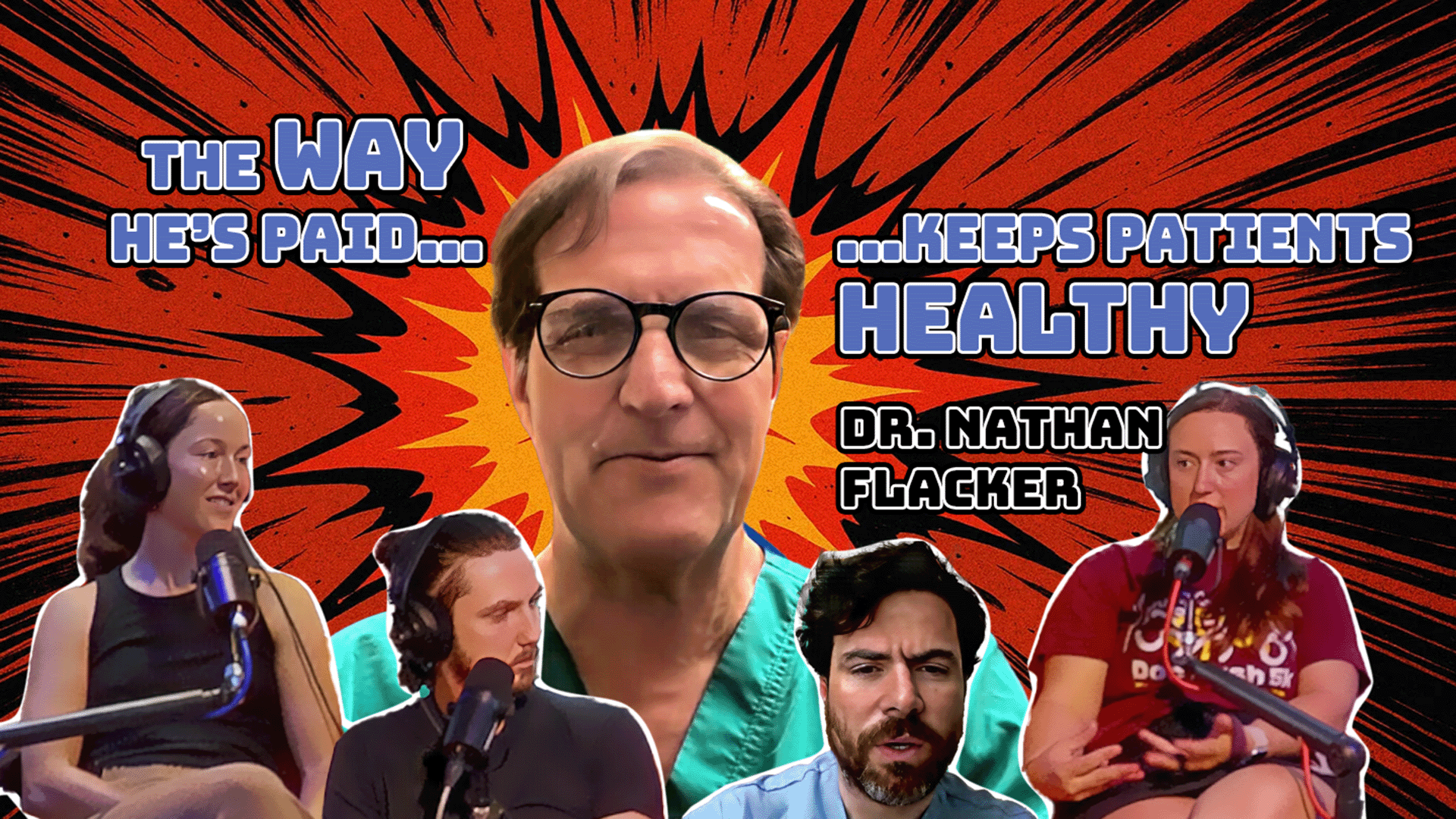
The way docs are paid can make patients sicker…or can lead to healthier ones. The payment schemes most docs work under incentivize them to fix patients, while others motivate them to prevent illness—and geriatrician Dr. Jonathan “Nathan” Flacker is here to explain why. This episode rips the curtain off RVUs, fee-for-service traps, and the real reason your doc is rushing through your visit (hint: it’s not personal, it’s math).

We dig into ChenMed’s wild idea: what if clinics got paid to keep you out of the hospital? Turns out, when money flows toward health instead of procedures, everyone wins. Except maybe the $400M proton beam facility (for the record, we love proton beams, but you might not need them if you can avoid cancer altogether).

Is concierge-style medicine only for the wealthy? What happens when you build “rich person care” for low-income seniors? And how many patients can a doc see well before it all breaks? If you’re dreaming of a career where you actually help people instead of just clicking boxes—this one’s a wake-up call.

Also: Love calls, RVU debt, and why pajama time should be illegal.

Episode credits:

  • Producer: Jeff Goddard
  • Co-hosts: Riley Behan-Bush, Zach Grissom, Alex Nigg
  • Guest: Dr. Jonathan “Nathan” Flacker, ChenMed

We Want to Hear From You: YOUR VOICE MATTERS!

We welcome your feedback, listener questions, and shower thoughts. Do you agree or disagree with something we said today? Did you hear something really helpful? Can we answer a question for you? Are we delivering a podcast you want to keep listening to? Let us know at https://theshortcoat.com/tellus and we’ll put your message in a future episode. Or email theshortcoats@gmail.com.

We need to know more about you! https://surveys.blubrry.com/theshortcoat (email a screenshot of the confirmation screen to theshortcoats@gmail.com with your mailing address and Dave will mail you a thank you package!)

The Short Coat Podcast is FeedSpot’s Top Iowa Student Podcast, and its Top Iowa Medical Podcast!  Thanks for listening!

Continue reading They Way Most Docs are Paid Doesn’t Lead to Healthier Patients →
Share

Your Thesis Won’t Change the World (and Here’s Why)

The path to discovery is paved with bureaucracy

Einstein was a patent clerk when he first proposed his famous equation that explained our universe…something that could never happen today. This week, we’re calling out the slow, tangled mess that is academic science. Why do some of the best ideas never leave a lab notebook? Why are 20-somethings with world-changing potential still spending 8 years writing theses that probably won’t be read? And why does grant funding seem allergic to risk?

MD/PhD student Riley Behan-Bush is juggling frustration, big ideas, and the reality of PhD science, and M3 Jeff Goddard, MD/PhD student Jess Smith, and M1 Sarah Lowenberg question whether Einstein would even make it today. Should the NIH institute a funding lottery? Jeff thinks Dave’s ringtone means he needs to grow up. And we finish strong by turning a stack of random medical words into fake personal statements.

It’s messy, it’s a little salty, and it’ll make you wonder how anything changes in medicine or science.

Episode credits:

  • Producer: Dave Etler
  • Co-hosts: Jeff Goddard, Sarah Lowenberg, Riley Behan-Bush, Jess Smith

We Want to Hear From You: YOUR VOICE MATTERS!

We welcome your feedback, listener questions, and shower thoughts. Do you agree or disagree with something we said today? Did you hear something really helpful? Can we answer a question for you? Are we delivering a podcast you want to keep listening to? Let us know at https://theshortcoat.com/tellus and we’ll put your message in a future episode. Or email theshortcoats@gmail.com.

The Short Coat Podcast is FeedSpot’s Top Iowa Student Podcast, and its Top Iowa Medical Podcast!  Thanks for listening!

Continue reading Your Thesis Won’t Change the World (and Here’s Why) →
Share

Stay or Run, Back from the Brink, Allopath v. Osteopath: Answering Listener Questions!

5 listener questions ANSWERED!

Dave Etler is joined by co-hosts MD/PhD student Riley Behan-Bush, and M1s Zach Elias and Demir Tuken, and M3 Hend Al-Kaylani to tackle a backlog of listener questions. Listener DeeDee shares her struggles with med school, parental expectations, and anxiety and depression–should she be in medical school at all? Cameron worries about overcoming a rocky academic start, Marvin’s trying to understand the value of an undergrad minor degree, Avery wants our take on how well CCOM integrates LGBTQ+ health education into the curriculum, and the cohosts weigh in on the differences between allopathic and osteopathic schools for Zion. We’re bringing our personal experiences, practical advice, and our flip phones to the table!

More about our guest:

We Want to Hear From You: YOUR VOICE MATTERS!

We welcome your feedback, listener questions, and shower thoughts. Do you agree or disagree with something we said today? Did you hear something really helpful? Can we answer a question for you? Are we delivering a podcast you want to keep listening to? Let us know at https://theshortcoat.com/tellus and we’ll put your message in a future episode. Or email theshortcoats@gmail.com.

We want to know more about you: Take the Listener Survey

Continue reading Stay or Run, Back from the Brink, Allopath v. Osteopath: Answering Listener Questions! →
Share

Dark Humor in Medicine, Family Expectations, and The Inviolable “Zone”

[Content warning: this episode contains frank discussions of X, Y and Z that many listeners will find disturbing.]

Once again, we decide who’s the asshole.

Dave is joined MD/PhD students Riley Behan-Bush and Miranda Schene, M3 Jeff Goddard, PA2 Julie Vuong, and M2 Holly Hemann for yet another AITA episode on humor in medicine, debating the appropriateness of jokes at others’ expense and the limits of comedy among emotionally volatile family members. The group also considers the complexities of family expectations, particularly in cultural contexts where children are perceived to owe careers to their parents’ investments. Listener feedback is highlighted, addressing concerns about biased opinions on PA and NP independence discussed in a previous episode. They share candid insights on dealing with criticism and the professional way to handle conflicts, and dissect themes of academic preparation, sibling rivalry, and the stress of high-stakes professional examinations.

We Want to Hear From You: YOUR VOICE MATTERS!

We welcome your feedback, listener questions, and shower thoughts. Do you agree or disagree with something we said today? Did you hear something really helpful? Can we answer a question for you? Are we delivering a podcast you want to keep listening to? Let us know at https://theshortcoat.com/tellus and we’ll put your message in a future episode. Or email theshortcoats@gmail.com.

We want to know more about you: Take the Listener Survey

Continue reading Dark Humor in Medicine, Family Expectations, and The Inviolable “Zone” →
Share

It’s Thanksgiving. Let’s “Help” People.

Reddit Health Questions, Answered

It’s the Thanksgiving holiday in the United States, so M4 Katie Higham-Kessler, PA2 Julie Vuong, and MD/PhD students Miranda Schene and Riley Behan-Bush give thanks to their future patients’ for their surprising questions (as suggested by Reddit’s r/AskDoctors and similar subs). Should one be concerned about foamy pee? How can one get white again? What can one do about a head dent? The crew also express thanks by giving and receiving compliments, something Dave thnks doesn’t happen enough (although that’s probably just him). Happy Thanksgiving!

We Want to Hear From You: YOUR VOICE MATTERS!

We welcome your feedback, listener questions, and shower thoughts. Do you agree or disagree with something we said today? Did you hear something really helpful? Can we answer a question for you? Are we delivering a podcast you want to keep listening to? Let us know at https://theshortcoat.com/tellus and we’ll put your message in a future episode. Or email theshortcoats@gmail.com.

We want to know more about you: Take the Listener Survey

Continue reading It’s Thanksgiving. Let’s “Help” People. →
Share

Worms, Fears, and Beethoven’s Ears (Recess Rehash)

[This episode is sponsored by Beginly Health. Whether you’re actively searching or casually exploring job opportunities, the Beginly platform matches you with complete anonymity until you’re ready for the next step.]

Our monthly roundup of news from the margins of medicine!

M1s Fallon Jung and Taryn O’Brien, M2 Jeff Goddard, and MD/PhD studnet Riley Behan Bush are on hand for our monthly news roundup. Including news that presidential candidate and anti-vaxxer Robert F. Kennedy’s brain was ‘eaten’ by a worm and his love of tuna sandwiches. Virtually all healthcare providers globally suffer from a clinical psychiatric disorder. Beethoven really liked lead-sweetened wine, which is probably why he was so sick and deaf. And a Tesla Cybertruck owner smashed his own finger with his vehicle’s frunk to prove that his vehicle’s frunk couldn’t smash his own finger. And can we guess what the shitty life pro tip from Reddit is? Plus lots more observations and revelations from the margins of medicine!

We Want to Hear From You: YOUR VOICE MATTERS!

We welcome your feedback, listener questions, and shower thoughts. Do you agree or disagree with something we said today? Did you hear something really helpful? Can we answer a question for you? Are we delivering a podcast you want to keep listening to? Let us know at https://theshortcoat.com/tellus and we’ll put your message in a future episode. Or email theshortcoats@gmail.com.

We want to know more about you: Take the Listener Survey

Continue reading Worms, Fears, and Beethoven’s Ears (Recess Rehash) →
Share