Tag Archives: artificial intelligence

Medicine is Changing. Step Up and Shape It

Artificial Intelligence and Machine Learning are Driving A Big Shift

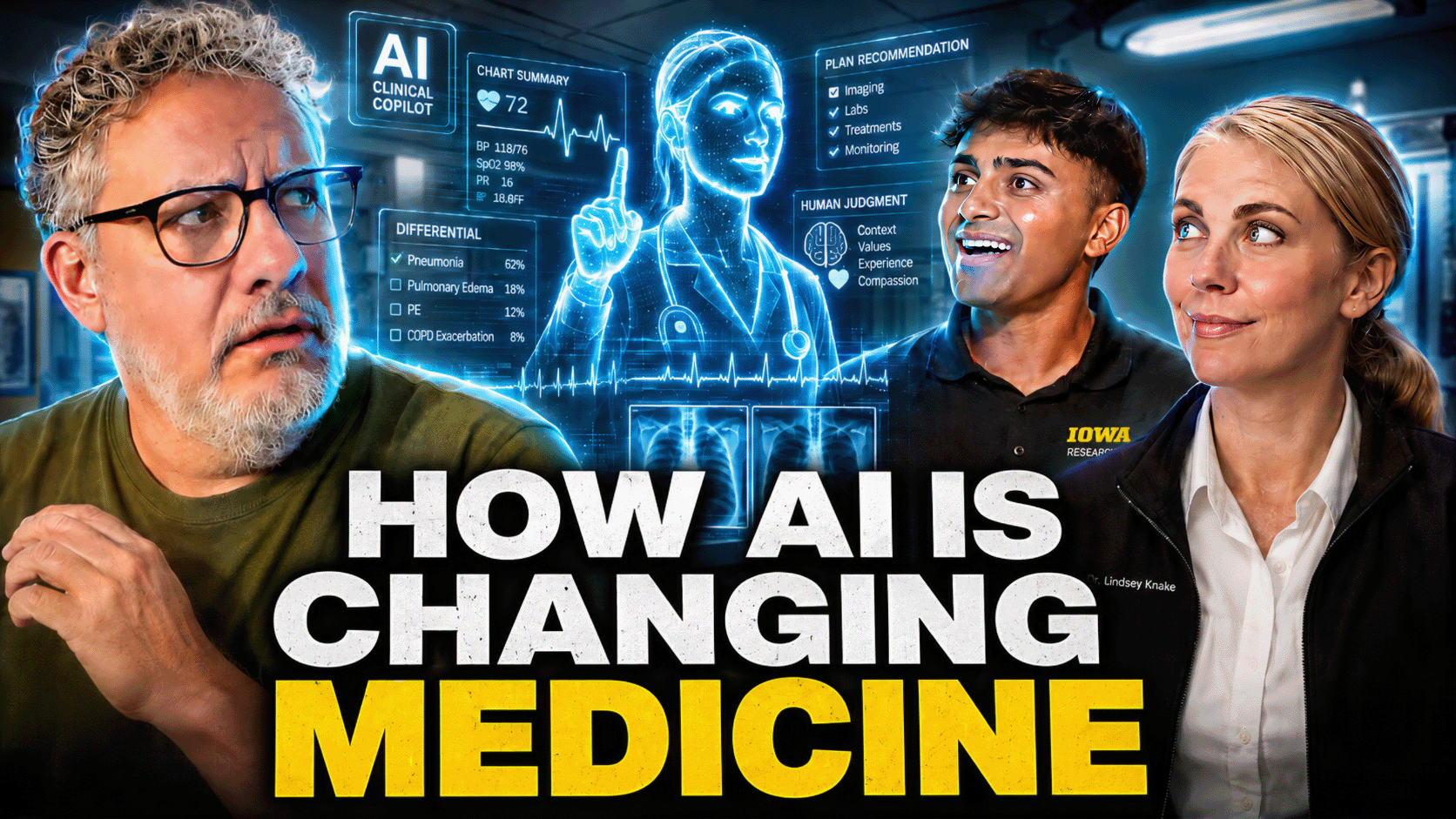
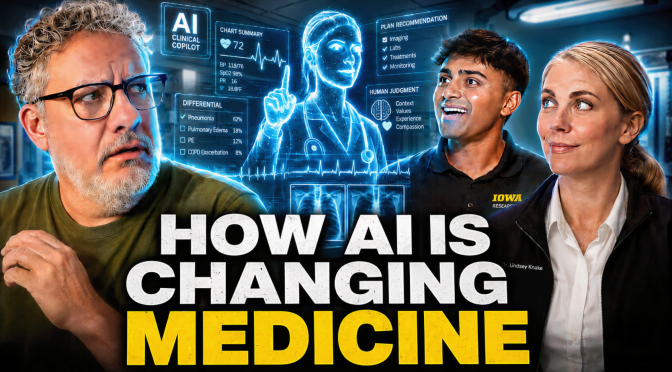
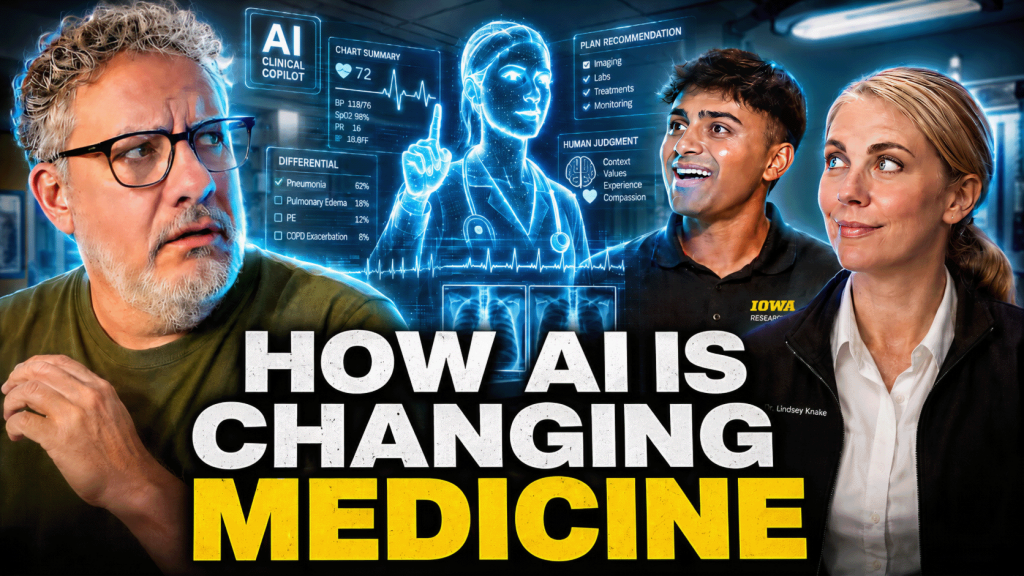
As societies and governments wrestle with the rise of artificial intelligence, The Short coats sit down with Dr. Lindsey Knake, a CCOM alum neonatologist and associate chief health information officer, to map out where AI actually stands in medicine right now. M2s Mukund Viswanadha, Deeraj Manika, and Samee Jung sort through the muddle of chatbots, agents, and machine learning, then get specific about the tools already embedded in their days: Nabla’s ambient listening scribes documenting patient conversations in real time, Open Evidence cutting through 500 PubMed results to the five that matter, and Epic’s Evidently pulling buried data out of years of outside-hospital notes in minutes instead of hours.

Dr. Knake also lays out Iowa’s new clinical informatics fellowship in detail — a two-year, post-residency program, still brand new to Iowa though established elsewhere for a decade, where fellows split 80% protected time and 20% clinical work. Then there’s Epic’s physician-builder boot camp, a week of training that turns clinicians into people who can actually build inside the EHR, plus a seat at the chief health information officer meetings where decisions like adopting new tools are made. She traces her own path into the field: a biomedical engineering degree, a mentor’s offhand question during her Vanderbilt fellowship interview, and a master’s in biomedical informatics picked up alongside her neonatology training. The informatics fellowship Dr. Knake co-leads up is explicitly framed as the pipeline for the next generation of doctors who’ll need to vet AI tools, not just use them.

As with many conversations around AI, the conversation doesn’t stay comfortable. Dr. Knake pushes back on her own optimism, raising the specter of de-skilling — what happens to clinical reasoning when the differential is a prompt away — and the students wonder if some are using AI as a crutch rather than a tool. And then there is the opposite reaction: students who refuse to engage with these tools. They’re not alone–some institutions are still locking AI out of medical training even as their own students use it anyway. It’s a frank look at a field trying to figure out what to keep, what to automate, and what gets lost and found in those decisions.
Episode credits:

  • Producer: Isa Perez-Sandi, Dave Etler
  • Co-hosts: Deeraj Monika, Samee Jung, Mukund Viswanadha
  • Guest: Lindsey Knake, MD
  • Production: SCP Media Lab–Anna Royer, Cyrus Barati, Isa Perez-Sandi, Zach Grissom, Sarah Upton, Srishti Mathur, David Lee, and Jacob Thompson 

The views and opinions expressed on this podcast belong solely to the individuals who share them. They do not represent the positions of the University of Iowa, the Carver College of Medicine, or the State of Iowa. All discussions are intended for entertainment purposes only and should not be taken as professional, legal, financial, or medical advice. Nothing said on this podcast should be used to diagnose, treat, or prevent any medical condition. Always seek qualified professional guidance for personal decisions.

We Want to Hear From You: YOUR VOICE MATTERS!

We welcome your feedback, listener questions, and shower thoughts. Do you agree or disagree with something we said today? Did you hear something really helpful? Can we answer a question for you? Are we delivering a podcast you want to keep listening to? Let us know at https://theshortcoat.com/tellus and we’ll put your message in a future episode. Or email theshortcoats@gmail.com.

We need to know more about you! https://surveys.blubrry.com/theshortcoat (email a screenshot of the confirmation screen to theshortcoats@gmail.com with your mailing address and Dave will mail you a thank you package!)

The Short Coat Podcast is FeedSpot’s Top Iowa Student Podcast, and its Top Iowa Medical Podcast!  Thanks for listening!

Continue reading Medicine is Changing. Step Up and Shape It

Share

Federal Loan Caps & Medical School Debt: What Future Doctors Need to Know

Medical School is Now More of a Gamble

Medical school just became a lot more expensive for some students and potentially impossible for others, thanks to the “Big Beautiful Bill.” We sit down with Chris Roling, University of Iowa’s financial aid guru, alongside M1 students Anna Royer and Isa Perez-Sandi, and M2 Maria Schapfel, to break down the most significant changes to medical student financial aid in decades. The new federal loan cap of $200,000 sounds generous until you realize the average four-year cost at public schools exceeds $280,000 and private schools hit $390,000. We talk through what happens when roughly a third of the student body already borrow more than the new limit would allow.

Chris explains how private loans work, why your credit score suddenly matters as much as your board scores, and what interest rates actually look like when federal options disappear. We examine the new Repayment Assistance Plan that replaces income-driven repayment, run the numbers on what unexpected life events could cost you, and discuss whether Public Service Loan Forgiveness is worth banking on (spoiler: Chris says don’t count on it).

Anna, Isa, and Maria share how these changes would’ve altered their medical school decisions, particularly for out-of-state students facing tuition bills that federal loans won’t touch. We also explore three-year MD programs as a potential cost-saving measure, debate whether institutions will actually lower tuition or just pass costs to students, and consider how these changes might further stratify who gets to become a doctor.

Plus, we tackle the week’s news: the Trump administration’s acetaminophen-autism claims, why AI still isn’t replacing radiologists despite 700 FDA-approved models, and the American College of Physicians calling for RFK Jr.’s removal from HHS.

Episode credits:

  • Producer: Dave Etler
  • Co-hosts: Maria Schapfel, Anna Royer, Isa Perez-Sandi
  • Guest: Chris Roling, CCOM Assistant Director of Financial Services

We Want to Hear From You: YOUR VOICE MATTERS!

We welcome your feedback, listener questions, and shower thoughts. Do you agree or disagree with something we said today? Did you hear something really helpful? Can we answer a question for you? Are we delivering a podcast you want to keep listening to? Let us know at https://theshortcoat.com/tellus and we’ll put your message in a future episode. Or email theshortcoats@gmail.com.

We need to know more about you! https://theshortcoat.com/survey (email a screenshot of the confirmation screen to theshortcoats@gmail.com with your mailing address and Dave will mail you a thank you package!)

The Short Coat Podcast is FeedSpot’s Top Iowa Student Podcast, and its Top Iowa Medical Podcast!  Thanks for listening!

Continue reading Federal Loan Caps & Medical School Debt: What Future Doctors Need to Know
Share

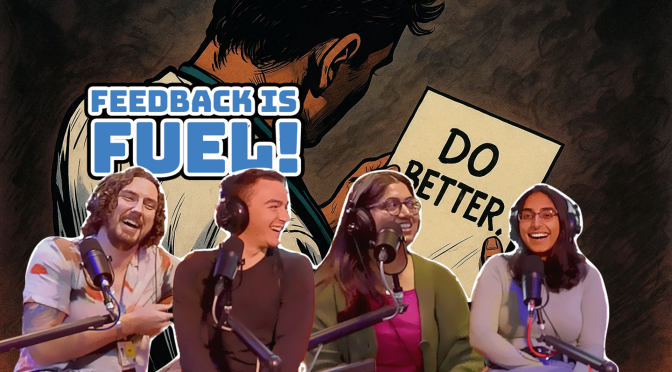
Feedback is Data, Not Devastation.

How to Take Negative Feedback And Use It to Win in Med School

Recently, our admissions coordinator Rachel was surprised by the reaction from an applicant CCOM chose not to admit. She’d set aside time to give the applicant some feedback on their application–an extra service we provide those who weren’t successful in their bid to study medicine here. But instead of a thoughtful reaction to her notes, the unsuccessful applicant told her that they “didn’t agree with any of that.”

The problem with this attitude is that in medical school feedback is never ending! Students get notes on interpersonal skills, professional behaviors, clinical skills, your knowledge base. And the feedback comes from everyone involved: simulated patients, actual patients, faculty, residents, nurses, even each other! Sometimes the feedback is formal and written; sometimes it’s verbal; and sometimes all you get is a raised eyebrow or a smile. Sometimes it’s rough, other times it’s SMART.

So M2s Zach Grissom, Sahana Sarin, Srishti Mathur, and Jay Miller give their take on this vital skill in medicine: using feedback as data, as fuel for growth. They share stories of getting useful and useless feedback. And whether you love it or hate it, you’ll leave with a playbook for using feedback to boost your success in medical school and your career.

Also, we discuss a study on AI “de-skilling,” and recent shifts in the amount of research medical students are doing versus the number of service and humanities experiences they’re doing.

Episode credits:

  • Producer: Dave Etler
  • Co-hosts: Zach Grissom, Srishti Mathur, Sahana Sarin, Jay Miller

We Want to Hear From You: YOUR VOICE MATTERS!

We welcome your feedback, listener questions, and shower thoughts. Do you agree or disagree with something we said today? Did you hear something really helpful? Can we answer a question for you? Are we delivering a podcast you want to keep listening to? Let us know at https://theshortcoat.com/tellus and we’ll put your message in a future episode. Or email theshortcoats@gmail.com.

We need to know more about you! https://surveys.blubrry.com/theshortcoat (email a screenshot of the confirmation screen to theshortcoats@gmail.com with your mailing address and Dave will mail you a thank you package!)

The Short Coat Podcast is FeedSpot’s Top Iowa Student Podcast, and its Top Iowa Medical Podcast!  Thanks for listening!

Continue reading Feedback is Data, Not Devastation.
Share

Sheriff of Sodium: AI Will Replace Doctors (Reality Check!)

Docs are in denial, but the economic incentives make it inevitable

You’re working hard to be (or become) a doctor — now a bot might take your place? The Sheriff of Sodium, Dr. Brian Carmody, is back on the Short Coat to say what nobody wants to hear but might need to: yes, AI in medicine is real, and the value proposition makes docs’ replacement inevitable. From primary care AI to image-heavy fields like pathology, we’re talking actual use cases.

We break down physician automation, the AMA’s waning influence, and why corporations – and even patients – might be the real force behind AI-driven doctor job loss. If you thought medical school guaranteed career security, this might shake your certainty. But there are specialties and human-only qualities that you can lean into for a bright future amidst the bots.

Then the Sheriff, M3 Jeff Goddard, MD/PhD Miranda Schene, M2s Sarah Lowenberg and Taryn O’Brien pivot to a deeply personal listener question: should a pre-med student push through to med school while struggling with mental health, like her parents want her to? Or take time off to regroup?

Episode credits:

We Want to Hear From You: YOUR VOICE MATTERS!

We welcome your feedback, listener questions, and shower thoughts. Do you agree or disagree with something we said today? Did you hear something really helpful? Can we answer a question for you? Are we delivering a podcast you want to keep listening to? Let us know at https://theshortcoat.com/tellus and we’ll put your message in a future episode. Or email theshortcoats@gmail.com.

The Short Coat Podcast is FeedSpot’s Top Iowa Student Podcast, and its Top Iowa Medical Podcast!  Thanks for listening!

Continue reading Sheriff of Sodium: AI Will Replace Doctors (Reality Check!)
Share

AI in Med School: Helpful Tool or Total Crutch?

MD and PA students reflect on what AI gets right—and what still makes them nervous.

“How are you using AI in med school?” That’s the question Dave posed to his co-hosts this week. Near-M3s Fallon Jung and Amanda Litka and almost-PA3 Julie Vuong discuss AI-fueled study sessions, and Dave points out a Google tool that turns docs into knowledge. They talk about what helps, what haunts, and what might accidentally erase their clinical instincts. Meanwhile, Fallon admits to looking to a robot to plan a bachelorette party. Amanda wants to ditch the white coat. And strong mints and clementines are the secret to surviving 3AM bowel resections. Also on the docket: what they’ve learned in their first few months seeing patients, OB night shift scaries, and which specialist they’d rather be stranded on an island with.

Listeners: do you use AI to get you through school? How? Sound off at https://theshortcoat.com/tellus!

Episode credits:

  • Producer: Dave Etler
  • Co-hosts: PA2 Julie Vuong, M2 Fallon Jung, M2 Amanda Litka

We Want to Hear From You: YOUR VOICE MATTERS!

We welcome your feedback, listener questions, and shower thoughts. Do you agree or disagree with something we said today? Did you hear something really helpful? Can we answer a question for you? Are we delivering a podcast you want to keep listening to? Let us know at https://theshortcoat.com/tellus and we’ll put your message in a future episode. Or email theshortcoats@gmail.com.

The Short Coat Podcast is FeedSpot’s Top Iowa Student Podcast, and its Top Iowa Medical Podcast!  Thanks for listening!

Continue reading AI in Med School: Helpful Tool or Total Crutch?
Share

The Chains of Med Ed History, with Adam Rodman (Recess Rehash)

[We’re taking a week off to recover from a really hard exam. Okay, it’s because Dave screwed up the schedule, but here’s a rerun you’ll enjoy ICYMI, and we’ll be back next week with a new episode]

The beginning of the 20th century brought huge changes to medicine; we’re still trying to cope with them

  • Special guest Dr. Adam Rodman, visits with M1s Jeff, Faith, and Linda and PA1 Kelsey, to talk about “path dependency,” the idea that a complex system (like medical education) is almost impossible to change without starting over. The path we have taken to today constrains what we can do tomorrow.
  • We discuss the founding of medical education as we know it today and how that has created an academic medicine system that values facts, science, and publication more than things like equity, empathy, and work-life balance.
  • The good news is that very dedicated people are working to make the sorely needed adjustments to these areas and more…without burning it all down and starting again.

More about Adam Rodman:

We Want to Hear From You: YOUR VOICE MATTERS!

No matter where you fall on any spectrum, we want your thoughts on our show.  Do you agree or disagree with something we said today?  Did you hear something really helpful?  Are we delivering a podcast you want to keep listening to?  We’ll be sure your ideas are heard by all–leave a message at 347-SHORTCT (347-746-7828) and we’ll put your message in a future episode (use *67 to be an “Unknown caller”).

We want to know more about you: Take the Listener Survey

Continue reading The Chains of Med Ed History, with Adam Rodman (Recess Rehash)
Share

Are We More Empathetic than AI?

AI chatbots can help brainstorm ways to communicate more compassionately.

  • We’ve talked about the study that found patients rated responses by the recent generation of AI chatbots significantly better in both quality and empathy than physicians.
  • We decided to test ourselves on our efforts to bring up awkward topics with patients and others by comparing our answers to those provided by Anthropic’s Claude-2. Did M2 Jeff Goddard, M3 Betty Tu, M2 Yumi Engelking, and MD/PhD student Riley Behan-Bush do better than a bot?
  • Betty and Yumi told us about CCOM’s new First Generation and Low-income in Medicine Association chapter.
  • And we review some of the health advice found on social media, including videos by Tik Tok’s urmomstoering, angelapharmd, heyitskikiiiiii, and mirandaksmith.

We Want to Hear From You: YOUR VOICE MATTERS!

No matter where you fall on any spectrum, we want your thoughts on our show.  Do you agree or disagree with something we said today?  Did you hear something really helpful?  Are we delivering a podcast you want to keep listening to?  We’ll be sure your ideas are heard by all–leave a message at 347-SHORTCT (347-746-7828) and we’ll put your message in a future episode (use *67 to be an “Unknown caller”). We want to know more about you: Take the Listener Survey We do more things on…

Continue reading Are We More Empathetic than AI?
Share

The Chains of Med Ed History, with Adam Rodman

The beginning of the 20th century brought huge changes to medicine; we’re still trying to cope with them

  • Special guest Dr. Adam Rodman, visits with M1s Jeff, Faith, and Linda and PA1 Kelsey, to talk about “path dependency,” the idea that a complex system (like medical education) is almost impossible to change without starting over. The path we have taken to today constrains what we can do tomorrow.
  • We discuss the founding of medical education as we know it today and how that has created an academic medicine system that values facts, science, and publication more than things like equity, empathy, and work-life balance.
  • The good news is that very dedicated people are working to make the sorely needed adjustments to these areas and more…without burning it all down and starting again.

More about Adam Rodman:

We Want to Hear From You: YOUR VOICE MATTERS!

No matter where you fall on any spectrum, we want your thoughts on our show.  Do you agree or disagree with something we said today?  Did you hear something really helpful?  Are we delivering a podcast you want to keep listening to?  We’ll be sure your ideas are heard by all–leave a message at 347-SHORTCT (347-746-7828) and we’ll put your message in a future episode (use *67 to be an “Unknown caller”).

We want to know more about you: Take the Listener Survey

Continue reading The Chains of Med Ed History, with Adam Rodman
Share

It’s Here: AI Powered Studying!

UVA med students create app to find AnKing flashcards for you.

  • M3s AJ and Ananya, and M4 Mason get a visit from the medical student creators of the machine-learning app NovaCards.ai.
  • Shane Chambers and Jordan Bagnall (and their co-founder Charbel Marche) found themselves spending tons of time finding AnKing flashcards to learn pre-clinical medicine, so they did what any modern medical student with AI-building chops does: get a computer to do it for them, automagically!
  • NovaCards is especially useful during pre-clinical courses, but Shane also talks about how he’s been using it himself during clinicals–and you can join the fun for free.
  • We also discuss the state of (and barriers to) the use of artificial intelligence in medicine.

More about our guests:

Website: https://novacards.ai/
Instagram: https://www.instagram.com/novacards.ai/
Twitter: https://twitter.com/NovacardsAI

We Want to Hear From You: YOUR VOICE MATTERS!

No matter where you fall on any spectrum, we want your thoughts on our show.  Do you agree or disagree with something we said today?  Did you hear something really helpful?  Are we delivering a podcast you want to keep listening to?  We’ll be sure your ideas are heard by all–leave a message at 347-SHORTCT (347-746-7828) and we’ll put your message in a future episode (use *67 to be an “Unknown caller”).

We want to know more about you: https://theshortcoat.com/we-want-to-know-you-better/

Continue reading It’s Here: AI Powered Studying!
Share

How Med Students Would Change Medicine

There’s plenty of change needed.

  • Dave asks his co-hosts to discuss the things they would like to change about medicine and medical education, if (when) they could.
  • A study in JAMA Pediatrics finds one reason students of color may drop out of med school: mistreatment.
  • Dave fiddles around with AI text-to-image software. Can his co-hosts guess what the AI was trying to create?

We Want to Hear From You: YOUR VOICE MATTERS!

No matter where you fall on any spectrum, we want your thoughts on our show.  Do you agree or disagree with something we said today?  Did you hear something really helpful?  Are we delivering a podcast you want to keep listening to?  We’ll be sure your ideas are heard by all–leave a message at 347-SHORTCT (347-746-7828) and we’ll put your message in a future episode (use *67 to be an “Unknown caller”).

We want to know more about you: Take the Listener Survey

Continue reading How Med Students Would Change Medicine
Share