Tag Archives: AI in medicine

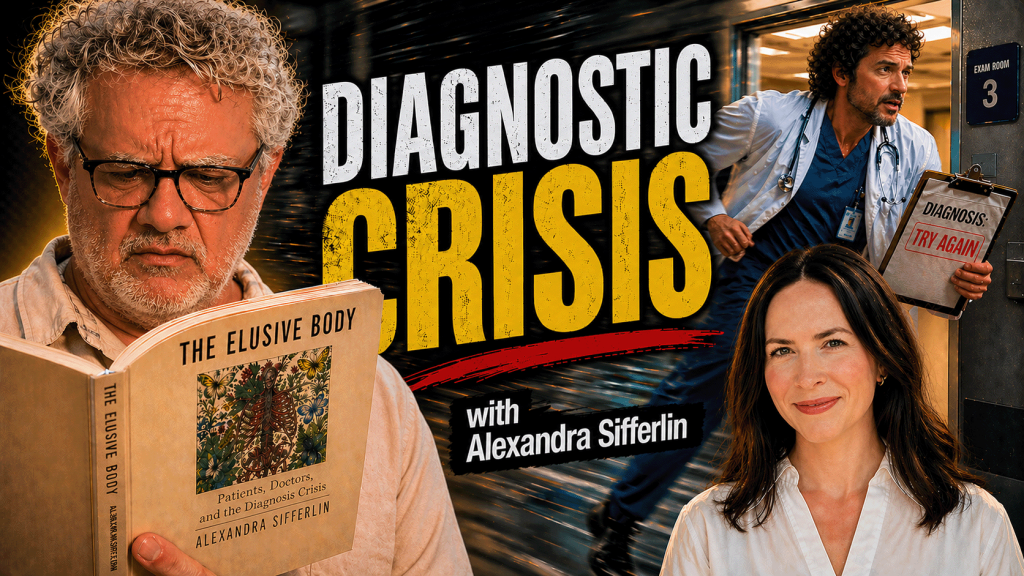
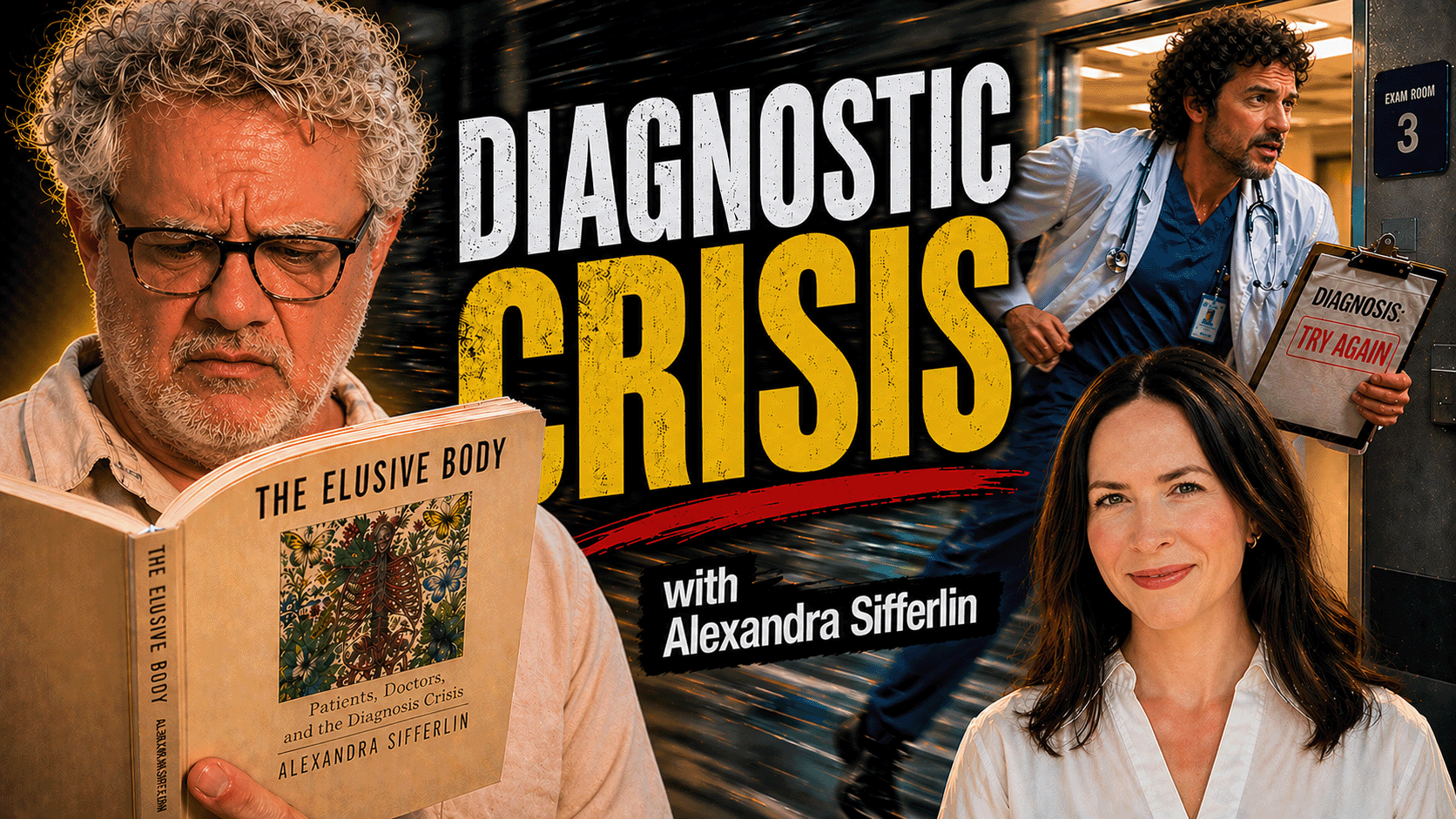
The Doctor Doesn’t Know Either: Inside the Diagnostic Crisis, with Alexandra Sifferlin

The feedback loop that would make doctors better diagnosticians doesn’t exist.

Louise walked five minutes. Then her legs turned to stone. She stood at the side of the road, waiting for them to work again—and nobody figured out why for thirty years.

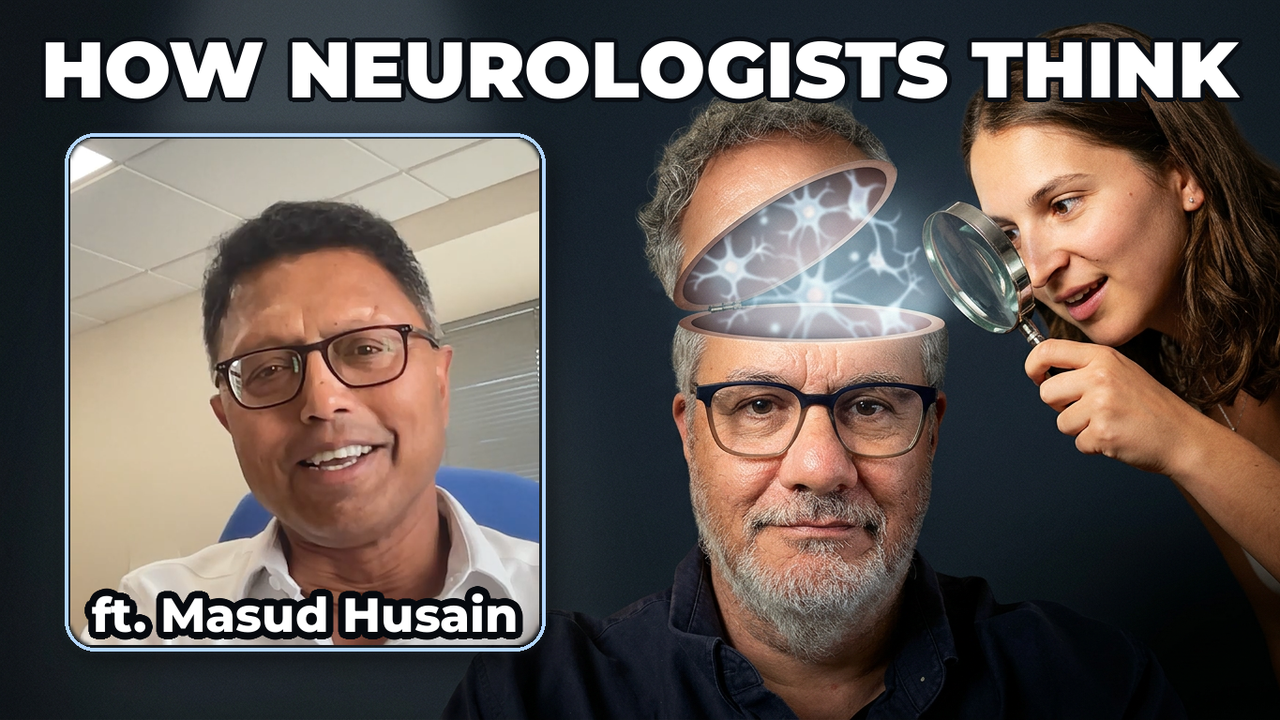
Author and New York Times Health and Science Opinion Editor Alexandra Sifferlin has spent years as a journalist fielding emails from patients who couldn’t get a straight answer from medicine—not because their doctors were incompetent, but because diagnosis is harder, messier, and more difficult to do in 15 minutes than anyone wants to admit. Her book The Elusive Body: Patients, Doctors, and the Diagnosis Crisis traces the problem from rural Kentucky to the NIH’s Undiagnosed Diseases Network, and her conversation with M4 Jeff Goddard, M1 Madelyn Klemmensen, and M2 Zach Goddard goes deep on the mechanics of how diagnostic errors actually happen: availability bias, the missing feedback loop, specialty tunnel vision, and the slow erosion of trust that pushes patients toward people selling them supplements.

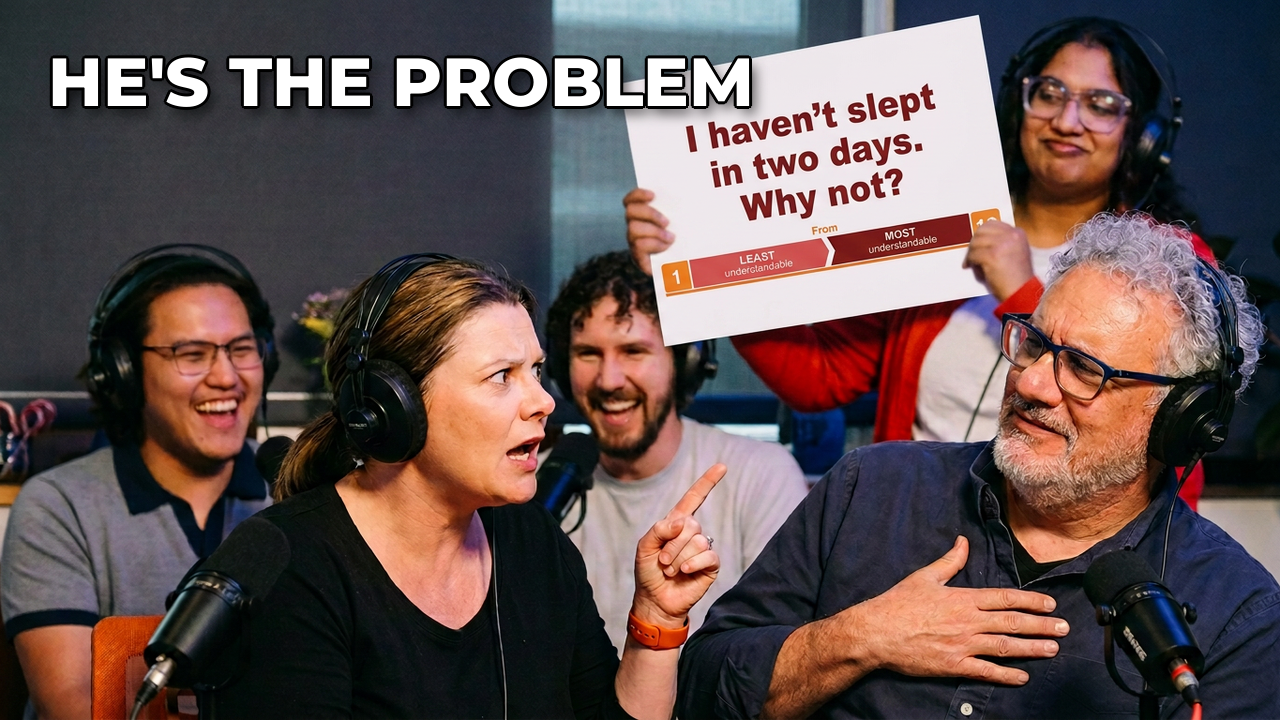
The students here aren’t just asking sympathetic questions, although Jeff is literally a character in the book, something Dave found out in real time on this episode. They push on the hard stuff: when is a placeholder diagnosis ethical, whether AI will save us or become a crutch, and what do you actually do about a healthcare system where the patient bounces between docs who don’t have answers. What they keep landing on is uncomfortable—medicine doesn’t have great solutions to this, but the relationship between patient and physician might matter more than the technology of medicine. Solving the diagnostic crisis might mean uncomfortable, expensive changes.

Episode credits:

  • Producer: Jeff Goddard
  • Co-hosts: Zach Grissom, Madelyn Klemmensen
  • Guest: Alexandra Sifferlin, https://www.alexandrasifferlin.com/
  • Production: SCP Media Lab–Anna Roger, Cyrus Barati, Isa Perez-Sandi, Zach Grissom, Sarah Upton, Srishti Mathur, David Lee, and Jacob Thompson 

The views and opinions expressed on this podcast belong solely to the individuals who share them. They do not represent the positions of the University of Iowa, the Carver College of Medicine, or the State of Iowa. All discussions are intended for entertainment purposes only and should not be taken as professional, legal, financial, or medical advice. Nothing said on this podcast should be used to diagnose, treat, or prevent any medical condition. Always seek qualified professional guidance for personal decisions.

We Want to Hear From You: YOUR VOICE MATTERS!

We welcome your feedback, listener questions, and shower thoughts. Do you agree or disagree with something we said today? Did you hear something really helpful? Can we answer a question for you? Are we delivering a podcast you want to keep listening to? Let us know at https://theshortcoat.com/tellus and we’ll put your message in a future episode. Or email theshortcoats@gmail.com.

We need to know more about you! https://surveys.blubrry.com/theshortcoat (email a screenshot of the confirmation screen to theshortcoats@gmail.com with your mailing address and Dave will mail you a thank you package!)

The Short Coat Podcast is FeedSpot’s Top Iowa Student Podcast, and its Top Iowa Medical Podcast!  Thanks for listening!

Continue reading The Doctor Doesn’t Know Either: Inside the Diagnostic Crisis, with Alexandra Sifferlin
Share

Feedback is Data, Not Devastation.

How to Take Negative Feedback And Use It to Win in Med School

Recently, our admissions coordinator Rachel was surprised by the reaction from an applicant CCOM chose not to admit. She’d set aside time to give the applicant some feedback on their application–an extra service we provide those who weren’t successful in their bid to study medicine here. But instead of a thoughtful reaction to her notes, the unsuccessful applicant told her that they “didn’t agree with any of that.”

The problem with this attitude is that in medical school feedback is never ending! Students get notes on interpersonal skills, professional behaviors, clinical skills, your knowledge base. And the feedback comes from everyone involved: simulated patients, actual patients, faculty, residents, nurses, even each other! Sometimes the feedback is formal and written; sometimes it’s verbal; and sometimes all you get is a raised eyebrow or a smile. Sometimes it’s rough, other times it’s SMART.

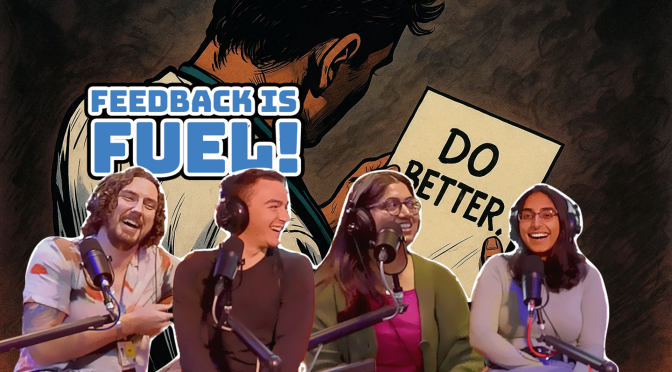
So M2s Zach Grissom, Sahana Sarin, Srishti Mathur, and Jay Miller give their take on this vital skill in medicine: using feedback as data, as fuel for growth. They share stories of getting useful and useless feedback. And whether you love it or hate it, you’ll leave with a playbook for using feedback to boost your success in medical school and your career.

Also, we discuss a study on AI “de-skilling,” and recent shifts in the amount of research medical students are doing versus the number of service and humanities experiences they’re doing.

Episode credits:

  • Producer: Dave Etler
  • Co-hosts: Zach Grissom, Srishti Mathur, Sahana Sarin, Jay Miller

We Want to Hear From You: YOUR VOICE MATTERS!

We welcome your feedback, listener questions, and shower thoughts. Do you agree or disagree with something we said today? Did you hear something really helpful? Can we answer a question for you? Are we delivering a podcast you want to keep listening to? Let us know at https://theshortcoat.com/tellus and we’ll put your message in a future episode. Or email theshortcoats@gmail.com.

We need to know more about you! https://surveys.blubrry.com/theshortcoat (email a screenshot of the confirmation screen to theshortcoats@gmail.com with your mailing address and Dave will mail you a thank you package!)

The Short Coat Podcast is FeedSpot’s Top Iowa Student Podcast, and its Top Iowa Medical Podcast!  Thanks for listening!

Continue reading Feedback is Data, Not Devastation.
Share

Trends in Medicine and Med Ed ft. Medscape’s Jon McKenna

We explore the trends in AI, residency, med school, and more

MD/PhD student Riley Behan-Bush, M4 Katie Higham-Kessler, and M3s Olivia Jenks and Elvira Nguepnang discuss 2024’s trends and topics in healthcare and medical education with Medscape’s Senior Editor of Reports Jon McKenna. The episode kicks off with exploring how AI is being adopted in healthcare, particularly in note-taking and administrative tasks, rather than diagnostic applications. The panel examines Medscape’s recent report on the medical school experience, highlighting issues like imposter syndrome, wellness, and equity in medical education. Jon provides insights from his surveys, noting encouraging trends in students’ sleep and exercise habits. The discussion also covers the challenges residents face, including work-life balance and the impact of systemic changes on residency experiences. The episode wraps up with an examination of the gender pay gap in medicine and what (if anything) can be done about it.

We Want to Hear From You: YOUR VOICE MATTERS!

We welcome your feedback, listener questions, and shower thoughts. Do you agree or disagree with something we said today? Did you hear something really helpful? Can we answer a question for you? Are we delivering a podcast you want to keep listening to? Let us know at https://theshortcoat.com/tellus and we’ll put your message in a future episode. Or email theshortcoats@gmail.com.

We want to know more about you: Take the Listener Survey

Continue reading Trends in Medicine and Med Ed ft. Medscape’s Jon McKenna
Share