Podcast: Play in new window | Download (Duration: 1:02:17 — 43.8MB)
Subscribe: Spotify | RSS | More
Physician scientists live at the intersection of clinic and lab
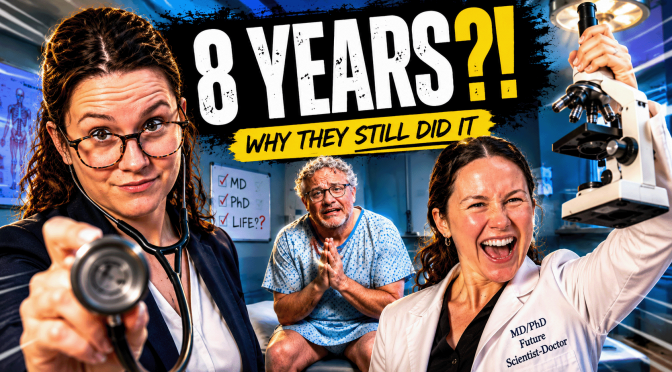
There are so many kinds of physicians. This time, we take a closer look at one type that, from the outside, might seem incredibly difficult to achieve–the MD/PhD. Eight years (!) of combined medical and scientist training seems like a lot. But consider the paths of MD/PhD students Riley Behan-Bush and Hannah Van Ert. Riley found the program through a Google search about whether to pick med school or grad school, and Hannah had already started a career in nursing before a research lab changed her path completely. To them, the eight years between starting and finishing ended up being the right move, and in the end, it often didn’t feel like a long slog of schooling (even if everyone outside the program still calls it school). Now in their final stretch, Hannah and Riley sit with Darren Hoffmann, PhD, and Martha Carvour, MD/PhD (CCOM Class of 2012) who now helps run Iowa’s Medical Scientist Training Program to shed light on this more meandering path to physician-hood.
The conversation doesn’t stay comfortable for long. The crew discusses recent federal funding cuts, the “sacrifices” MD/PhDs make for the path, NIH grant uncertainty, and the question of who gets to become a physician scientist when the money starts moving around in unpredictable ways. Darren puts it plainly: those who control the money don’t have the imagination needed to make the changes scientists envision; grant-writing done well is the bridge for that gap. Hannah speaks of her fright when cuts led some MSTP programs to worry they wouldn’t be able to accept students. She’s also thinking about what the pipeline looks like in fifteen years and whether it defaults back to “wealthier white men.” Riley’s optimistic that physician scientists, because they talk to patients every single day, are better positioned than anyone to rebuild public trust in science, a view Hannah is less convinced of. Martha thinks historically scientists have often been too concerned with their own niche interests, when they should spend more time showing up in their communities.
Episode credits:
- Producer: Isa Perez-Sandi
- Co-hosts: Riley Behan-Bush, Hannah Van Ert
- Guest: Martha Carvour, MD/PhD; Darren Hoffmann, PhD
- Production: SCP Media Lab–Anna Roger, Cyrus Barati, Isa Perez-Sandi, Zach Grissom, Sarah Upton, Srishti Mathur, David Lee, and Jacob Thompson
The views and opinions expressed on this podcast belong solely to the individuals who share them. They do not represent the positions of the University of Iowa, the Carver College of Medicine, or the State of Iowa. All discussions are intended for entertainment purposes only and should not be taken as professional, legal, financial, or medical advice. Nothing said on this podcast should be used to diagnose, treat, or prevent any medical condition. Always seek qualified professional guidance for personal decisions.
We Want to Hear From You: YOUR VOICE MATTERS!
We welcome your feedback, listener questions, and shower thoughts. Do you agree or disagree with something we said today? Did you hear something really helpful? Can we answer a question for you? Are we delivering a podcast you want to keep listening to? Let us know at https://theshortcoat.com/tellus and we’ll put your message in a future episode. Or email theshortcoats@gmail.com.
We need to know more about you! https://surveys.blubrry.com/theshortcoat (email a screenshot of the confirmation screen to theshortcoats@gmail.com with your mailing address and Dave will mail you a thank you package!)
The Short Coat Podcast is FeedSpot’s Top Iowa Student Podcast, and its Top Iowa Medical Podcast! Thanks for listening!
We do more things on…
- Instagram: https://www.instagram.com/theshortcoat
- YouTube: https://www.youtube.com/theshortcoat
You deserve to be happy and healthy. If you’re struggling with racism, harassment, hate, your mental health, or some other crisis, visit http://theshortcoat.com/help, and send additions to the resources there to theshortcoats@gmail.com. We love you.
AI disclosure: Voices of host, co-hosts, and guests are human. Some other voices–such as listener questions or questions/comments from the internet–may be AI generated.